Thursday, November 24, 2011
Thanksgiving Day 2011
You can find plenty of information about this subject in the article published in this blog two years ago.
I would like you to visit this other page as well, and enjoy the photos of one of the most famous Thanksgiving parades in USA : Macy's 2011 parade.
And tomorrow is black Friday, ready to make your Xmas shopping?
Monday, June 20, 2011
See you next year!
Hi folks! Today we´ve been downtown Málaga taking snapshots of the English words you can find in shops or restaurants. There are many, many of them all over the place, sometimes we even use the English words thinking they are in Spanish as it happens with parking. Some franchises don´t even care about translating their own publicity into Spanish, and it feels so cool to announce their summer collection or their frozen yoghurt.
We ended up on La Malagueta, there we had some fun despite the cold water.
And from here we want to see you off until next year.
SEE YOU IN SEPTEMBER!
Saturday, May 28, 2011
International year of forests 2011
Sunday, April 24, 2011
Our Easter. Article written by Ángel Luis Díez López 3ºESO B

In my city, Easter is a very important festivity. Tourists come from many countries to see our processions.
Different sculptures of Christ and Virgins go around Málaga´s streets in spring nights.
PALM SUNDAY
Every Palm Sunday, Pollinica brotherhood visits Malaga´s city center. The “nazarenos” carry olive branches to celebrate Christ arrival in Jerusalen.
The “Lágrimas y Favores” Virgin walks around Málaga in Palm Sunday morning too. Antonio Banderas, a very famous actor, comes from USA to help in the procession.
At 3 o´clock, “Dulce Nombre” brotherhood gives us a serious and rigorous environment.
After 45 minutes, the “ Salutación” steps Málaga´s roads.
In “el Ejido”, the “Prendimiento” prepares to leave.
15 minutes after that, the “Huerto” leaves from Mártires in search of our city center. It shows a very special Christ praying in a garden.
At 17:15, “Salud” brotherhood leaves from San Pablo, in Trinidad.
The last procession is “Humildad”. This procession is called “Servitas Blancos” because they are very silent.
EASTER MONDAY
It is a very special day in Málaga.
Monday is opened by “Crucifixión”. It comes from “El Ejido”. From start to finish, the “portadores” wear two fantastic “tronos”: a crucified Christ and a sad Virgin.
The second procession, at 17:15, is “Gitanos” in Los Frailes. It is a very singular parade. People sing “saetas (songs)” to the images. A Christ tied to a column and María de la O. If you are gypsy, this is your procession!
If you live near “los Mártires” you have to see “La Pasión”. It is very special because there are two “tronos”: a very handsome Christ and a desperate Virgin.
At 19:00, near the Roman theater, “Estudiantes” brotherhood begins its journey.
From Santo Domingo, “Dolores del Puente”, goes out in procesión at 20:00. There are two images of crucified Christ in the first “trono”, in the second “trono”, the virgin is crying.
But the most special and waited parade is “El Cautivo”. This is a very simple image but it´s very beautiful. It is Málaga´s most famous procession.
HOLY TUESDAY
It is a good day.
At 15:30, from “La Victoria”, “Rocio” brotherhood begins it journey. The virgin “Rocio” is very special in Málaga because it is Málaga´s girlfriend.
After 30 minutes the “Nueva Esperanza” is preparing to leave. That procession starts at 16:00 and it finishes at 4:00! It is the longest parade of the day and people have to be walking for 12 hours!
But it´s very interesting: the Christ is carrying a cross.
The “Penas” brotherhood is very special too. The Christ is very normal but the Virgin´s mantle is very different: it is done with flowers!
The “Rescate” and the “Sentencia” are very similar but they are very interesting so you have to see them both.
The “Estrella” brotherhood is very beautiful: its Virgin is crying and it´s very startling.
HOLY WEDNESDAY
“Salesianos” are the earliest parade. It is a very serious procession and it only has one “trono”,
“Fusionadas” is very special with 4 “tronos”. It´s the slowest procession so you should sit down.
Every year, the “Rico” brotherhodd releases a prisoner. It is a very old tradition and it´s very exciting too.
The “Paloma” is very well known too. Some doves fly near its Virgin.
The “Sangre” is a very ancient brotherhood. The Christ is crucified and it is very bloody.
“Expiración” closes this day. It is a very beautiful brotherhood.
HOLY THURSDAY
This is the best day of the week. The “legionarios” come to Málaga to accompany the parades.
The “Santa Cruz” opens this day. It is a very simple brotherhood but it is very interesting.
The “Cena” is very singular because it has the biggest “trono”.
The “Viñeros” is very important too.
But the most important and waited processions are “Mena”, “Misericordia”, “Zamarrilla” and “Esperanza”. The “legionarios” accompany them.
GOOD FRIDAY
Christ has died and everybody is very sad.
At 17:35, “Dolores” starts its parade.
The “Descendimiento” shows the descent of Christ from the cross.
“Calvario” is a very disconsolate Virgin.
In the “Traslado”, Christ is carried to the tomb.
In the “Amor”, the Virgin is crying thinking about her child.
In the “Piedad”, Christ has died and the Virgin is holding him.
The “Sepulcro” shows Christ´s tomb. Everybody is silent and the virgin is crying.
But the most diferent and special procesion is “Tercera Orden de Siervos de María Santísima de los Dolores (Servitas)”. It is a scary parade. The “nazarenos” ask for forgiveness to the Virgin. While the procession is passing, the lights are out. We can only hear nazarenos´s laments. The Virgin is very simple but it´s very scary and beautiful.
RESURRECTION SUNDAY
There is only a procession this day : ”Resucitado”. Christ has raised from the dead and the Virgin is very happy.
Monday, April 11, 2011
50 years ago...
They brought the cakes and drinks into class and after the lesson they ate them all, yummy, yummy!
PS, the giant chocolate cake was made by Álvaro, and he will love to give you the recipe!
Wednesday, March 30, 2011
SPRING IS HERE

Spring has come again, and here we are worried about marks and end of second term activities. I propose you an activity, what about sharing poetry with your friends?
It could be a long poem on spring like this one by Christina Rossetti:
Or it could just be a short one like this poem by the same author:
Who Has Seen the Wind?
by Christina Rossetti
Who has seen the wind?
Neither I nor you;
But when the leaves hang trembling
The wind is passing through.
Who has seen the wind?
Neither you nor I;
But when the trees bow down their heads
The wind is passing by.
Give your favourite poems to your teachers to have them published here.
Wednesday, February 2, 2011
Groundhog day 2011: no shadow, spring is near!

Today is Groundhog day. The story of this celebration begins with Candlemas, an early Christian holiday where candles were blessed and distributed. Celebrators of the holiday eventually declared clear skies on Candlemas meant a longer winter. The Roman legions, during the conquest of the northern country, brought this tradition to the Germans, who concluded that if the sun made an appearance on Candlemas Day, a hedgehog would cast a shadow, thus predicting six more weeks of bad weather or "Second Winter." German immigrants brought the tradition to Pennsylvania, but how did Punxsutawney Phil emerge?
In 1887, a spirited group of groundhog hunters from Punxsutawney dubbed themselves "The Punxsutawney Groundhog Club." One member was an editor of Punxsutawney's newspaper. Using his ink, he proclaimed Punxsutawney Phil, the local groundhog, to be the one and only weather prognosticating groundhog. He issued this proclamation on Candlemas, and yes, Groundhog Day. Phil's fame spread, and newspapers from around the globe began to report his Gobbler's Knob prediction.
Today you will find 20,000+ in attendance and millions watching on television or via the web.
Saturday, January 29, 2011
Málaga in the 60s

Ángel Luis Díez López 3º ESO B
There was an industrial growth in Málaga in the 60s. Also the services grew. And the most important one: our economy was opened to the rest of the countries. Foreign people were investing in our country and in our town. And the people that lived in the villages went to the cities to improve their lives. This was the most important fact in our economy. The agriculture was more modern too!
In my city, Málaga there was a tourist development. English, German and French people came here. The "boom" of Torremolinos was very important. People bought houses in this town.
People were not literate and only could study those who had got money. Those who did not attend school, worked in the tourism. This caused many people to emigrate to other countries. Unemployment, lack of opportunity and misery forced to thousands of people from Málaga to go abroad in search of a better world. Emigration was an option to find employment in Germany, Holland... Many of these emigrants returned to Málaga later on, while others took root in cities that host them. France and Germany were the main destinations of these emigrants. Those who migrated learnt a new language, new customs... The main objective of the emigrants was raising money to settle. The train station of Málaga was the place where many emigrants began their trips. But no only Europe was the culmination of the people of Málaga. Australia also received them.
In those years, there were some very important singers: John Coltrane, Jimi Hendrix... And in my city, there was a very important movement: the "Beatlemania". Everybody heard the songs of this band.
In 60s, the sales of cars and televisions increased. Also improved healthcare. There were improvements in Franco's regime too. There were new patterns of social relationships and new patterns of relationship between the sexes.
The dresses showed more skin and curves. Mary Quant, stunned the world with the miniskirt. Hot pants arose. The typical costume pajamas or shorts were essential to look at fashion parties. Men grow their hair long and you could see many beards and sideburns there. Also in men's fashion colors were bright polyester pants and turtleneck sweaters.
A Spatial movement appears with a futuristic and minimalist approach. The designers were inspired by pop art, and there was the fashion boom "unisex".
These are the most important things that happened in the 60s in Málaga when our high school Nuestra Señora de la Victoria was built.
Tuesday, January 25, 2011
Burns' Day in Scotland
Today is Burns day in Scotland. It commemorates the life of the poet Robert Burns, who was born on January 25, 1759.
Tonight will be the time of eating Scottish delicacies such as Scotch broth, cock-a-leekie soup or potato soup, accompanied by Scottish Oat Bread. Haggis, sheep liver, heart and lungs together with oatmeal boiled in broth. Neeps, turnips, and tatties. They will toast with a good Scotch whiskey and will finally sing Burns´ poem auld lang syne, you will recognize the song from the films, people always sing it on New Year's Eve
Sunday, January 16, 2011
50 years ago in Málaga...


This year we are celebrating the 50th anniversary of our building in Nuestra Señora de la Victoria. It would be interesting to remember what happened in Málaga at that time to have a complete view of the situation.
I propose you a task: find out what Málaga was like in the 60s.
You can ask your grandparents, go to a library, search in Internet, or talk to your teachers (specially to Mr Jiménez, he knows a lot about Málaga).
There are many subjects you can choose: economy, politics, education, family life, music, fashion, neighbourhoods...
That is, you can write about Francisco García Grana, mayor in 1960; the tram; Pepa Flores versus Marisol; or the Princess Ira Von Fürstenberg's first husband, Prince Alfonso of Hohenlohe-Langenburg and their house in Marbella...
Start working and talk to your teacher of English to publish it here.
Thursday, December 16, 2010

Now that holidays are very close I invite you to read last year article in this blog on the topic Christmas.
Christmas is a time of joy and of overeating too. We eat lots of sweets and most of the time we forget about healthy habits.
A group of 2 º ESO students have asked their partners about their healthy habits . It may surprise you that half of the interviewed students , whatever their age, eat junk food (comida basura) twice a week. Or that only 50% of them practice any sport at all, talking about teenagers this number should be higher, don't you think so?
| AGE | 12 | 13 | 14 | 15 | 16 |
| Do you brush your teeth every morning? | 70 % | 90 % | 100 % | 100 % | 100 % |
| Do you eat two pieces of fruit everyday? | 40 % | 40 % | 60 % | 80 % | 80 % |
| Do you practice any sport? | 60 % | 50 % | 50 % | 50 % | 50 % |
| Do you eat pizza or hamburgers twice a week? | 60 % | 80 % | 30 % | 50 % | 50 % |
| Affirmative answers | |||||
At least most of them brush their teeth and eat fruit everyday!
How about you? Do you think that hamburgers or pizza could be healthy too?
Friday, November 12, 2010
Robots are not science fiction any more
Watch this and think of your future: Female Android Geminoid F
Thursday, November 11, 2010
On 2nd November a group of 2 ESO students went to Málaga airport. They want to tell us what they saw:
“We visited the old airport. It was the first one in Málaga. There is now a museum. We got into three old planes.”
Carolina Riffi, Sara Ponce and L. Tarrazona
“There were dummies of air hostess and pilots. We watched them through a window”
Lidia Soler and MiriamVacas
“We went to the map room, there was a map of the airport. We also saw a helicopter, it was very large and it was just painted”
Antonio Sánchez and Moisés Córdoba
Guillermo Gutiérrez and Álvaro Camacho
“We went to the airport and we saw the museum teaching material. There we learned playing, we dressed up, we moved parts of planes, etc.”
Araceli Rodríguez and Carmen López
“Finally, we saw Roman tumbs. The workers discovered them when they were doing the museum. We saw a well too.”
Lorena Martos, Samara Santiago and Israel Jiménez
Sunday, October 24, 2010
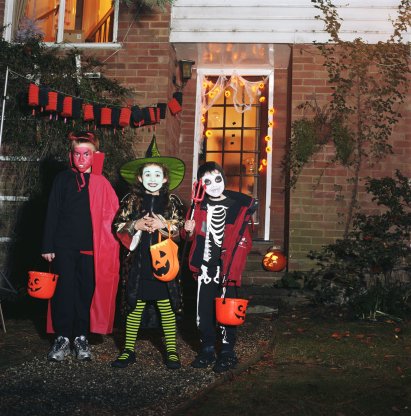
There are different ways of representing this party: the pumpkins, the candles... Halloween imagery includes themes of death, evil, the occult, magic, mythical monsters, ghosts, witches, skeletons, vampires, werewolves, demons, bats, and black cats. Black and orange represent the darkness of night and the color of bonfires, autumn leaves, and jack-o'-lanterns.
Children go to houses asking for sweets. The typical phrase is: trick or treat. Halloween costumes are traditionally modeled after monsters such as ghosts, skeletons, witches, and devils. Over time, the costume selection extended to include popular characters from fiction, celebrities, and generic archetypes such as ninjas and princesses. Dressing up was prevalent in Scotland and Ireland at Halloween by the 19th century. Costumes became popular for Halloween parties in the US in the 20th century, for adults as well as for children.
Halloween is not celebrated in all the countries and regions of the world. Celebrations in the United States and Canada have had a significant impact on how the holiday is observed in other nations. In my city, Málaga, I meet my friends and we celebrate a party with many sweets. We do many games too. Our favorite game is after turning off the lights, we hide and a person must find us. It's called The Black Hall.
Angel Luís Díez López, 3º ESO B
Halloween is a very famous party in UK, but in Málaga too. Here, children go to the houses to ask for sweets, and some people give them money.
Children dress up and make-up to be scarier than their friends. Children dress up as vampires , witches , Frankestein and as ghosts.
The English people that live in Málaga give a lot of money and many sweets to the children because they remember their cities.
The typical colours are orange, black and red. Some people buy pumpkins to decorate their homes.
Carmen María Méndez Moreno 3º ESO B
Halloween will be here soon!
This typical English and American celebration is very popular in the world. Halloween is a very ancient celebration in honour of the dead.
People feast it in UK, and America of course, but in other countries too, like, for example, in Spain, concretely in Málaga, the city where I live.
In Málaga, teenagers and kids go out with their friends at night. Usually, kids disguise like monsters, ghosts, witches, sick-people, dead-men and dead-women , Frankenstein, the dead bride… and then, they go to their neighbours' houses to request candies and lollipops with the typical sentence “trick or treat” (like the English and American kids do).
Teenagers don´t always do the same; some of them make parties at friends' houses , or they meet and tell stories of fear, or they impersonate kids… some of them don´t celebrate it.
Another thing that they do for Halloween is to scare friends with all kinds of jokes .
Finally: don´t stay at home in Halloween!
Candela Mesa Cuevas 3º ESO B
Sunday, October 10, 2010
More greetings...
My high school is very far from my home. I go there because my friends and my favourite teachers are there. My high school was the first high school in Málaga! It is an historical school. Many famous people studied here like Picasso, Manuel Altolaguirre and others.
In my school there is a library, a gym, a snack bar, lost of classrooms, a computer classroom, a technology class (where you can make objects of wood and watch the interior of computers), a music class (where there are some musical instruments). There are also two laboratories where you can watch cells in the microscope and do experiments.
And teachers are fantastic!
Every Tuesday and Thursday I go to a language school. I study French there. At he weekends I meet my friends and we go shopping. We buy clothes, shoes… I love reading books but I hate listening to music. My favourite subjecs are English, French, Geography, and History. I don’t like Physical Education because there are not tests.
Come here you will have fun!!!
Hi! I'm Raquel, I'm 14 years old, I'm from Málaga and I live here too. I study on Ntra Señora de la Victoria high school. I am in 3º of ESO, in classroom B.
I study here because it is next to my home and my friends study here, too. My favourite subjects are English, French and Art, but this year we don't do it. The best place of my high school is the library because it is very old and it has got lots of books. In my high school studied very famous people as Pablo Picasso, Manuel Altolaguirre, Severo Ochoa or José Ortega y Gasset.
My high school is very old but it has got an interesting history too. The biggest place of my high school is its chapel, though it's now an auditorium. Finally, I can say that I like my high school!
Tuesday, October 5, 2010
Healthy eating
Let me give you some advices on healthy eating meanwhile:
— Don't eat anything your great-grandmother wouldn't recognize as food.
— Don't eat anything with more than five ingredients, or ingredients you can't pronounce.
— Stay out of the middle of the supermarket; shop on the perimeter, where real food tends to be located.
— Don't eat anything that won't rot eventually.
— Always leave the table a little hungry.
— Enjoy meals with the people you love.
— Don't buy food where you buy your gasoline.
Friday, October 1, 2010
Back to school greetings

Hi there!, here we are again, this year we are celebrating a very special date: it's the 50th anniversary of the construction of our High School Nuestra Señora de la Victoria.
For this reason, I would like you to describe some of the wonders that can be found in our old building:its facilities, its peculiarities, or even the reason behind its name. You know there is a person who can help you finding out these details, your teacher Mr José Francisco Jiménez Trujillo.
I hope this will be a good way of meeting new friends and, at the same time, of learning something about our high school.
Here we have the first message, give yours to your teacher of English to be published!
Hi! my name is Candela, and I´m 13 though I´m at 3º E.S.O (in B class) because my birthday is on 18th December. I´m from Madrid, but I live in Málaga, I love swimming and going to Malaga beaches (however, my favourite beaches are in Tarifa).
I go to "Ntra. Sra. De La Victoria" high school everyday, except on holidays or weekends. I go there because it´s near my house , and my friends study there too.
In my high school there are a library, a gym, lots of classrooms, a classroom of technology, a classroom of art, something similar to a bar...
My high school is very famous in Málaga, it was the first high school in Málaga!! and lots of famous people like Picasso (a VERY famous painter) or Severo Ochoa (a scientist , he won a Nobel) studied at the Ntra. Sra. de La Victoria high school.
Every Monday and Thursday, I go to swimming classes, I can swim very well now.
I like dancing but I don´t know how to do it well. Of course, I like meeting friends, watching tv, listening to music, reading books, chatting on the Internet...
Tuesday, June 1, 2010
Should Bachillerato students be allowed to leave the High School during break time?
Recently, many High Schools have banned Bachillerato students from leaving school during break time. This is an issue which Bachillerato students have clear opinions about.
On the one hand, if Bachillerato students leave the High School, even though it is just for half an hour, they might not return, or they could be unpunctual to a class. Besides, they might have an accident and the the center is in charge of them.
In addition, many students who are in Bachillerato are not eighteen years old, so it is more dangerous for them if they go out.
On the other hand, if students leave the High School during half an hour, it helps them to change the setting and they will not feel oppressed when they return to class. They can work harder.
Moreover, they will feel it as an example of being trusted.
Personally, I believe that if the students are responsible and punctual in their classes, the headmaster could allow them to leave the High School during break time.
Beatriz Gutiérrez Caneda
IES Nuestra Señora de la Victoria
1º Bachillerato B
Nowadays, Bachillerato students cannot leave the High School during break time because there is a new law that the Government has passed on that matter.
Two years ago, Bachillerato students could leave the High School, even if they were underage.
On the one hand, I think that this new law is correct because before it some students could have an accident during the break time and the High School could be accused of it. Besides, parents were not aware of their children's attitude.
On the other hand, Bachillerato students want to stay separate from Secondary students and feel freer. They think that leaving school is a way of showing their maturity.
In conclusion, it is important that students who are not eighteen years old are not allowed to leave the High School because if they have an accident, the center would have many problems. Moreover, we have to think that students are safer inside the High School.
Marisa Ramírez Fernández
IES Nuestra Señora de la Victoria
1º Bachillerato B
Bachillerato students want to leave the High School during break time to have more time without younger children and be free for a little time. But their parents and their teachers do not want this because it can bring problems to them.
On the one hand, Bachillerato students want to leave the High School during break time because this fact makes them feel responsible. They want to be without children younger than themselves.
On the other hand, their parents and their teachers do not want it because this would cause that Bachillerato students have an accident during this time and the responsible person would be the headmaster of the school.
In my opinion, if Bachillerato students show that they are responsible, they should be allowed to leave High School during break time.
Irene Albea Martínez
IES Nuestra Señora de la Victoria
1º Bachillerato B
If you want to give your opinion on this topic, write it and give it to your teachers of English, they will publish it here.
Thursday, May 13, 2010
End-of-year school trip: 1º or 2º Bachillerato?
The date of the end-of-year school trip is a very common issue when students get to Bachillerato. There is a lot of controversy about travelling in 1º or in 2º Bachillerato.
On the one hand, if students do the trip in 2º Bachillerato, they will have a great experience before they leave school. Besides, it will be a wonderful leaving party with the graduation.
In addition, students could save money for more time and, having more money, they can do a better trip or go to a farther destination.
On the other hand, students in 2º Bachillerato are very worried with Selectivity. If they take it, they will have to study.
Moreover, most of them are eighteen year old so they could think that they are grown-ups and then they could believe to have more freedom, but if they cause any damage in the hotel for example, it will have serious consequences.
Personally, I think that if students are responsible and they study every day of the year, the trip can be made in 2º Bachillerato and it can provide a unique experience for them
Beatriz Gutiérrez Caneda
IES Nuestra Señora de la Victoria
1º Bachillerato B
If you want to give your opinion on this topic, write it and give it to your teachers of English, they will publish it here.
Thursday, April 1, 2010
Happy April Fools' Day!
April Fools' Day, sometimes called All Fools' Day, is one of the most light hearted days of the year. Its origins are uncertain. Some see it as a celebration related to the turn of the seasons, while others believe it stems from the adoption of a new calendar.
Ancient cultures, including those as varied as the Romans and the Hindus, celebrated New Year's Day on or around April 1. It closely follows the vernal equinox (March 20th or March 21st.) In medieval times, much of Europe celebrated March 25, the Feast of Annunciation, as the beginning of the new year.
In 1582, Pope Gregory XIII ordered a new calendar (the Gregorian Calendar) to replace the old Julian Calendar. The new calendar called for New Year's Day to be celebrated Jan. 1. That year, France adopted the reformed calendar and shifted New Year's day to Jan. 1. According to a popular explanation, many people either refused to accept the new date, or did not learn about it, and continued to celebrate New Year's Day on April 1. These backward folk were labeled as "fools" by the general populace. Other people began to make fun of these traditionalists, sending them on "fool's errands" or trying to trick them into believing something false. Eventually, the practice spread throughout Europe.
The soul of April Fool's Day lies in the funny pranks that are played on that day. The real good prank is the one that makes the victim laugh and enjoy as much as the other people who witness it. It's not nice to harm someone while pranking people and keep it safe.
In Spain we celebrate the Day of the Innocents on December 28th. It observes the day when, according to the Gospel of Matthew in the Bible, King Herod ordered the baby boys under 2 years old in Bethlehem to be killed because he was afraid that the baby Jesus born there would become a rival. As it turned out, though, the baby Jesus had been taken away to Egypt by Mary and Joseph. So the "joke" was on Herod, and thus followed the tradition of tricking friends on that day.
It is Easter in Spain today, and it makes it even odder to think of pulling someone's leg, but just take April Fools' Day into account in case you receive an incredible e-mail from an English friend...